
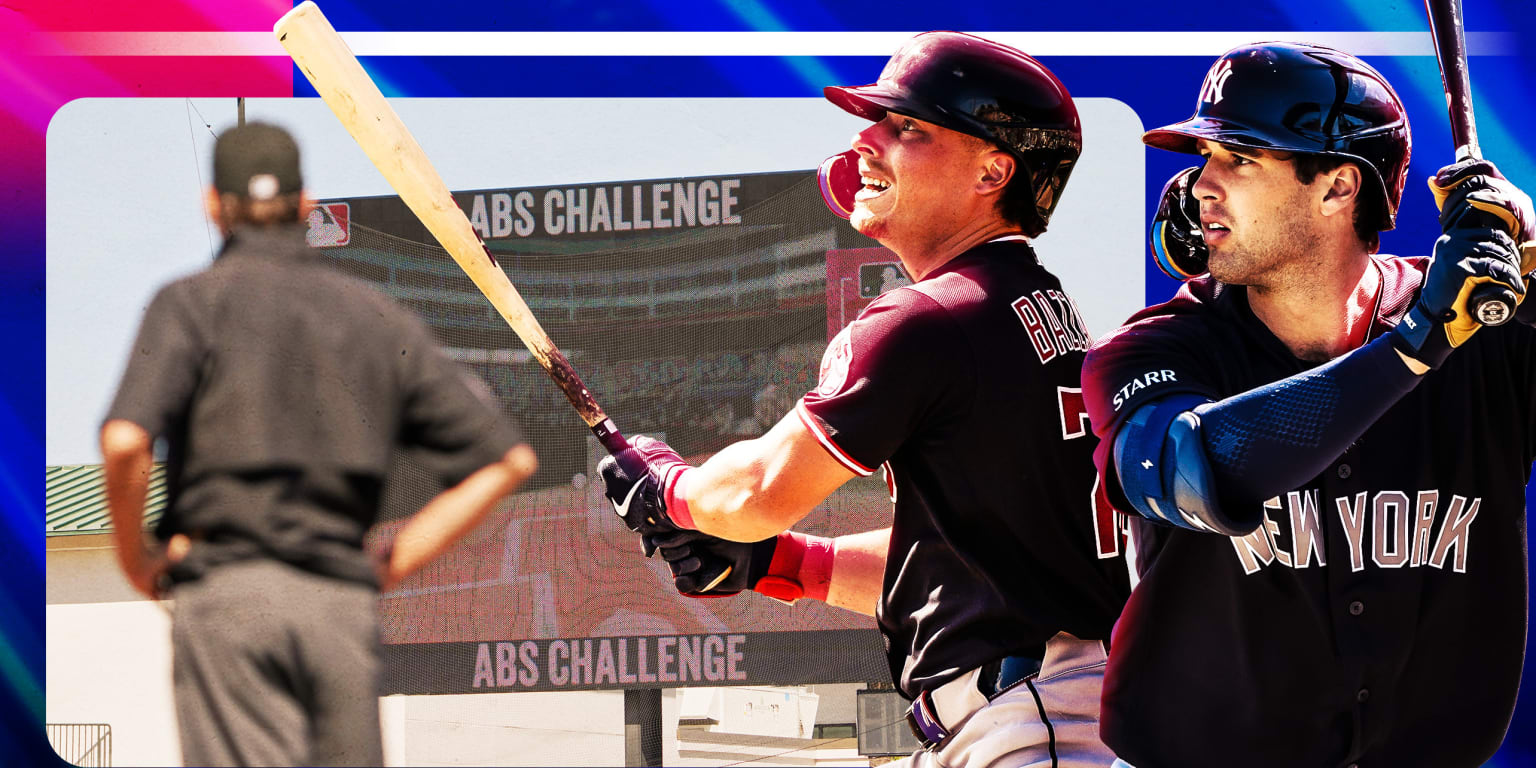
MLB’s New ABS Challenge System: Early Insights from Spring Training & Triple-A
Published: March 1, 2026 | 247sports.news
The Dawn of a New Era in Umpire Calls
Major League Baseball is poised to enter a new era of precision and strategy with the introduction of the Automated Ball-Strike (ABS) Challenge System, powered by T-Mobile, beginning with the 2026 season. This system allows players to appeal strike-zone judgments made by human umpires, a change tested in the Minor Leagues since 2022 and in Major League Spring Training last year.
Key Players Emerging in the ABS Landscape
Early data from the 2025 Triple-A season and Spring Training are revealing which players are most adept at utilizing the new challenge system. Here’s a look at some of the standouts:
Top Hitters Challenging Calls
- Davis Schneider: Finished the 2025 season with a remarkable 83% success rate (10 wins out of 12 challenges), excelling at challenging called strikes on the outside edge of the plate.
Schneider was particularly effective in challenging called strikes on the outside edge of the plate, which included reversing five potential strikeouts.
- Jamie Westbrook: Generated +19.9 Reversed Decisions vs. Expected, the highest figure among Triple-A hitters, demonstrating a knack for both successfully challenging and influencing opponent challenges.
- Spencer Jones: A 6-foot-7 power prospect who showed effectiveness in challenging pitches on the inside and outside edges of the zone.
- Yonathan Perlaza: Led Triple-A in changing plate appearances, reversing seven potential strikeouts and creating four additional walks through successful challenges.
- Cooper Ingle: A Top 100 prospect who demonstrated proficiency both as a hitter and a catcher in challenging calls.
Top Receivers Challenging Calls
- PJ Higgins: Generated an impressive +27.5 Reversed Decisions vs. Expected, winning 87% of his challenges (48 of 62).
Higgins won 21 challenges on pitches that were inside the strike zone by less than an inch, managing to reverse called balls even when only a fraction of the ball touched the edge of the zone.
- Blake Hunt: Excelled at getting strikeouts for his pitchers and eliminating walks for his team through challenges.
- Jeferson Quero: A highly-regarded catching prospect who contributed +9.2 Reversed Decisions vs. Expected.
Insights from the Data
The data reveals interesting trends. Shorter hitters, like Jamie Westbrook (5’7”), appeared to have an advantage in challenging pitches at the top of the strike zone, whereas taller hitters, like Spencer Jones, focused on the edges. Some players, like Deyvison de los Santos, were overly aggressive with challenges, resulting in a negative value. De los Santos challenged 18.8% of all challengeable pitches he saw in Triple-A, that is, when his team still had challenges available and the pitch was called a strike against him.
How the System Works
The ABS Challenge System monitors the exact location of each pitch relative to the batter’s zone. Players can request a challenge, and the result is displayed on videoboards and broadcasts via a 5G network from T-Mobile’s Advanced Network Solutions. The game is briefly interrupted while the call is reviewed and either confirmed or overturned.
FAQ
- What is the ABS Challenge System? It allows players to appeal strike-zone calls made by umpires using automated ball and strike technology.
- When does the ABS Challenge System begin? The 2026 MLB season.
- Who powers the ABS Challenge System? T-Mobile.